

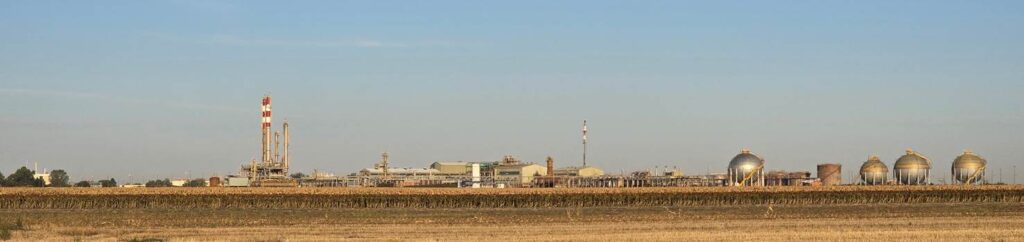
The factory for the production of synthetic rubber in Elemir near Zrenjanin began operating at the end of 1983, and has been part of HIP-Petrohemija since 1991. The factory has three production units.
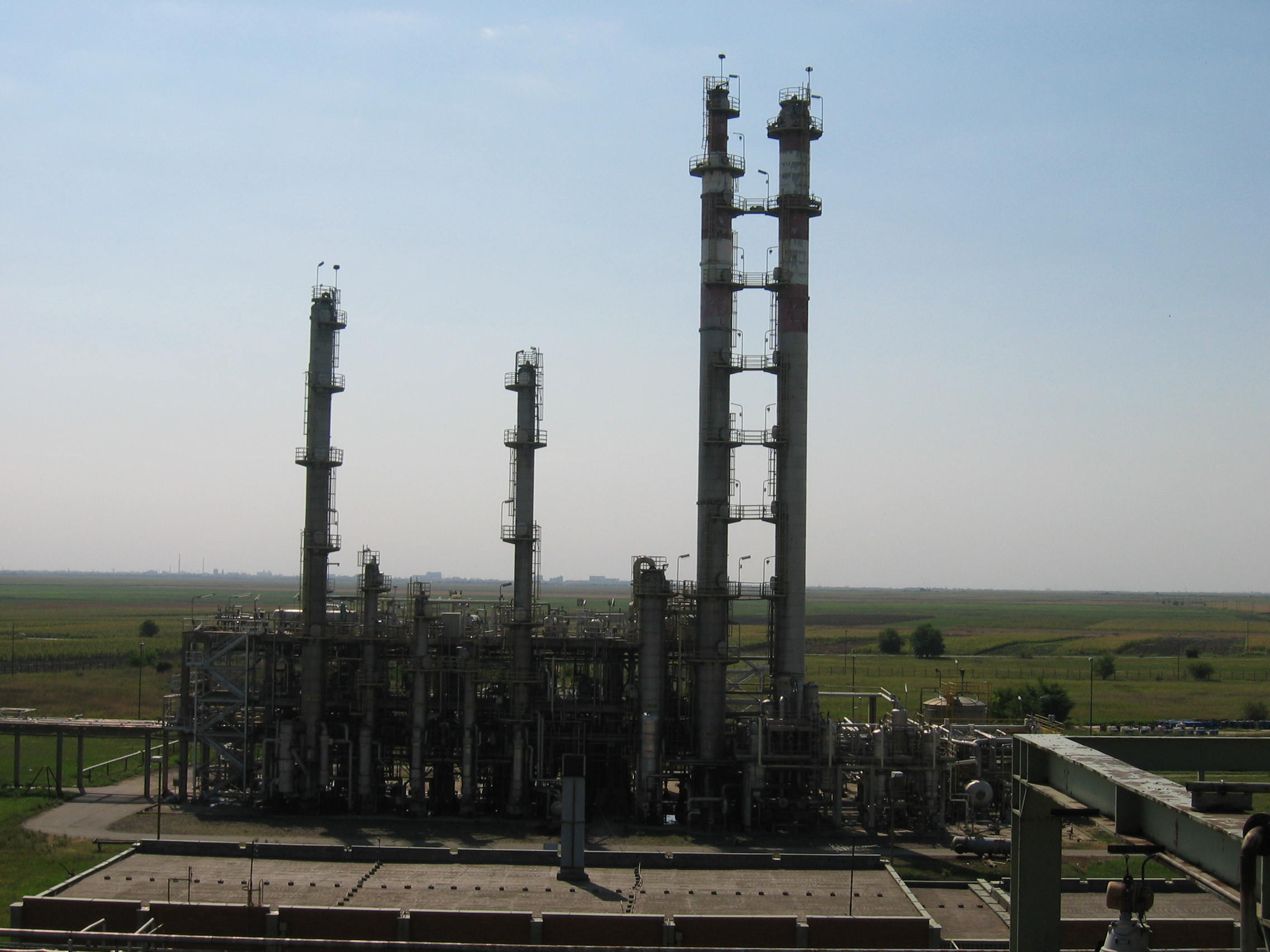
Plant for the production of styrene-butadiene rubber (SBR)
The licensor of this facility is Bunawerke Huls of Germany, and the project was developed by Lurgi, also of Germany. The product is emulsion styrene-butadiene rubber (SBR), with an annual capacity of 40,000 tons. Three different types of SBR rubber are produced under the trade name HIPREN®, namely two types of the 1500 series and one type of the 1700 series. SBR is obtained by a low-temperature reaction of copolymerization of styrene and butadiene, which takes place in an aqueous emulsion in the presence of initiators and modifiers. After the necessary chemical preparations and subcooling, the reactants are continuously introduced into the first polymerization reactor. The reaction takes place in a series of eight sequentially connected flow reactors. Depending on the type of rubber being produced, two types of emulsifiers are used. One is based on resin soap, and the other is based on a mixture of fatty acids and resin soap. The reaction is stopped by the addition of a stopper at the desired degree of monomer conversion (about 60%). Latex is obtained as an intermediate product, a stable colloidal dispersion of polymers in water with unreacted monomers. Regeneration separates unreacted butadiene and styrene from the latex, which are used again in the polymerization process. The obtained synthetic rubber is washed with water, dried and baled. Bales of rubber are wrapped in polyethylene film and packed in wooden box pallets.
Emulsion SBR has a wide field of application. Depending on the type of rubber, it is used for the production of automobile and truck tires, footwear, floor coverings, adhesives, hoses, conveyor belts, high-strength technical goods, etc.
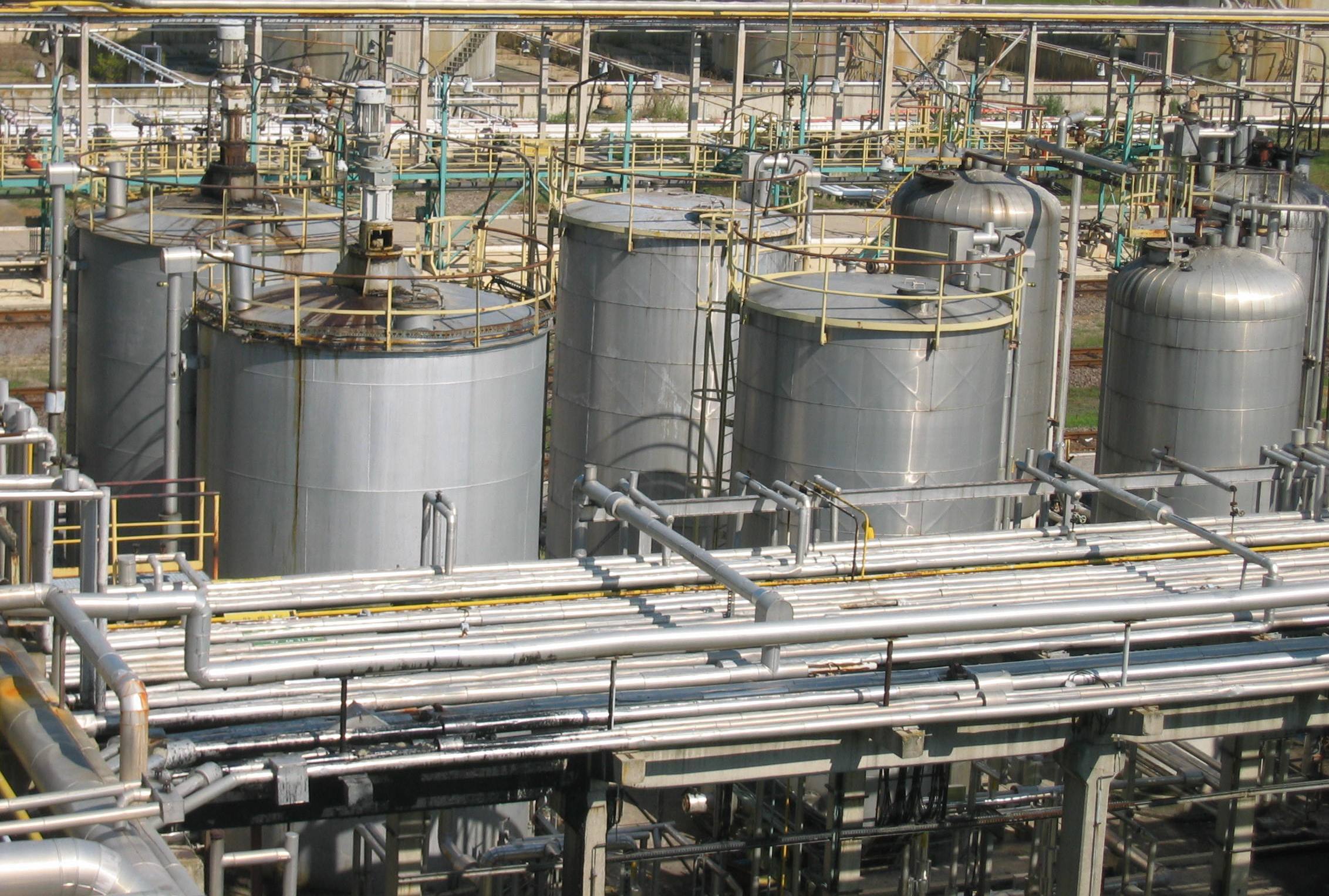
Plant for the production of Methyl Tertiary Butyl Ether (MTBE)
The license and project are from Snam Progetti from Italy. The main product is methyl-tertiary-butyl ether (MTBE), and the annual capacity is 35,000 tons. The secondary product is raffinate-2.
MTBE is obtained by catalytic reaction of esterification of isobutene (from raffinate-1) with methanol. The process takes place in two flow pipe reactors, where the first reactor takes place for the most part of the reaction, while the second has only a final function. A strictly selective catalyst is used in the reactors, which allows the reaction to take place only between isobutene and methanol, while other hydrocarbons pass through the reactors unhindered. The resulting MTBE and unreacted hydrocarbons are introduced into a distillation column where they are separated and MTBE is removed from the bottom of the column, and raffinate-2 (mixture of butene and butane) from the top of the column. As finished products, they are transported through pipelines to storage tanks.
MTBE is used as an additive for motor gasoline, and raffinate-2 as an energy source or a very valuable petrochemical raw material for further processing.
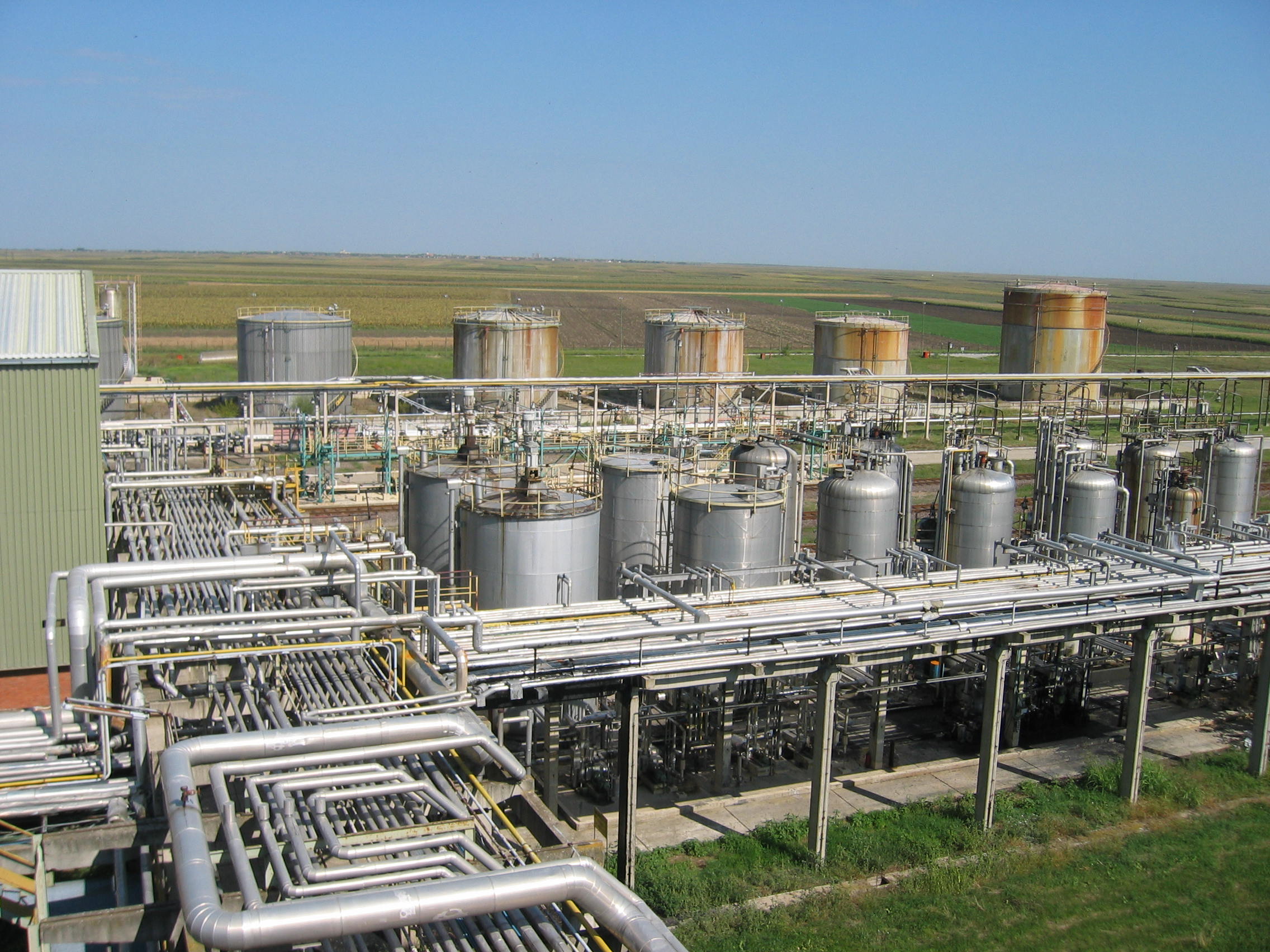
Butadiene Extraction Plant (EXBD)
The production of 1,3-butadiene is done under the license of Nippon Zeon (Japan), and the projected capacity is 45,000 tons per year. The secondary product is raffinate-1 (butane-butene fraction). High purity 1,3-butadiene (min 99.5%) is obtained by the physico-chemical process of two-stage extractive rectification. C4 fraction from ethylene plants is used as raw material. The extractive solvent is dimethylformamide (DMF). In the first section of extractive distillation, the C4 fraction is separated into two streams, one of which contains butanes and butenes, which are less soluble in the solvent, while the other contains butadiene and acetylenes, which are more soluble. The flow of butadiene and acetylene is pushed into the second section of the extractive distillation, where the separation into crude butadiene and acetylene is carried out. The crude butadiene goes to the fractional distillation section, where it is purified to obtain a product of appropriate purity. Butadiene as a finished product is further transported by pipelines to a storage tank or directly to the SBR production plant. The stream of butane and butene produced by the separation in the first section, after separation of the C3 components, as a secondary product raffinate-1, is transported through pipelines to storage tanks, and then used for the production of MTBE.
Butadiene is mainly used in the production of synthetic polymers such as synthetic rubber (SBR, polybutadiene rubber, nitrile rubber, neoprene, etc.), then thermoplastics (ABS-acrylonitrile butadiene styrene used in the electronics and automotive industries) and latex (styrene-butadiene copolymer latex used in the paper, carpet industry, etc.)