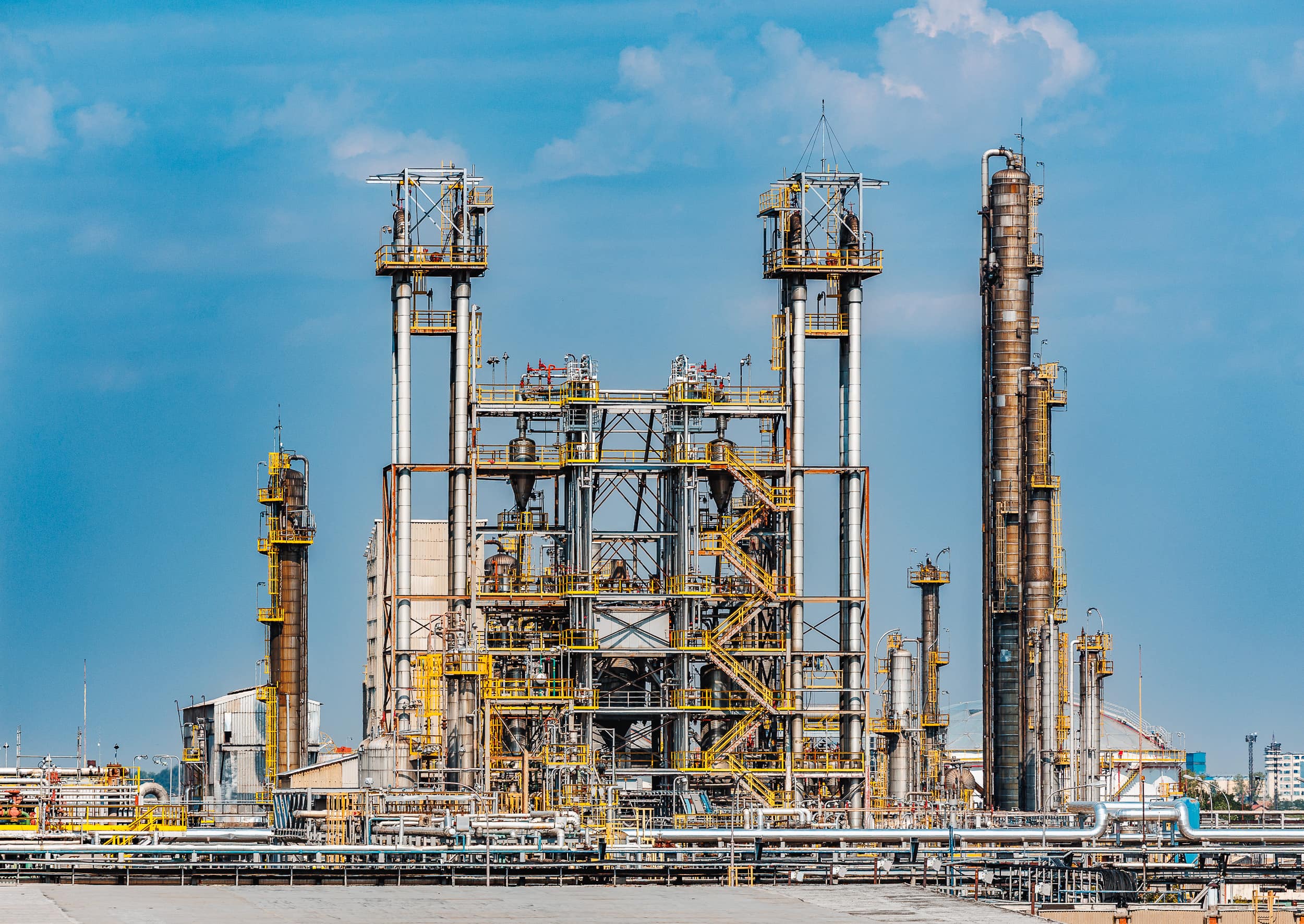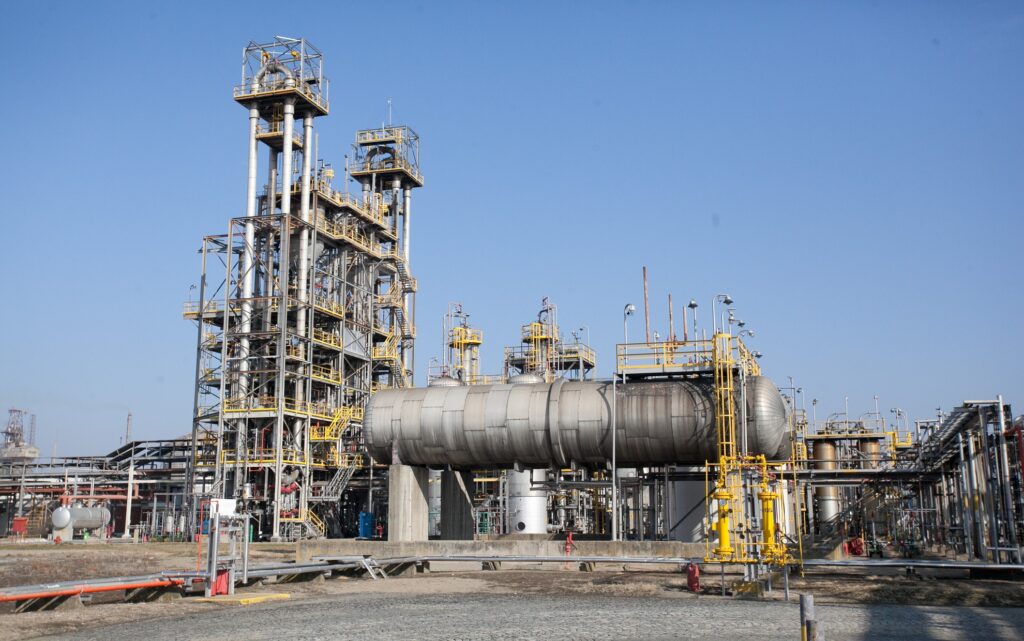
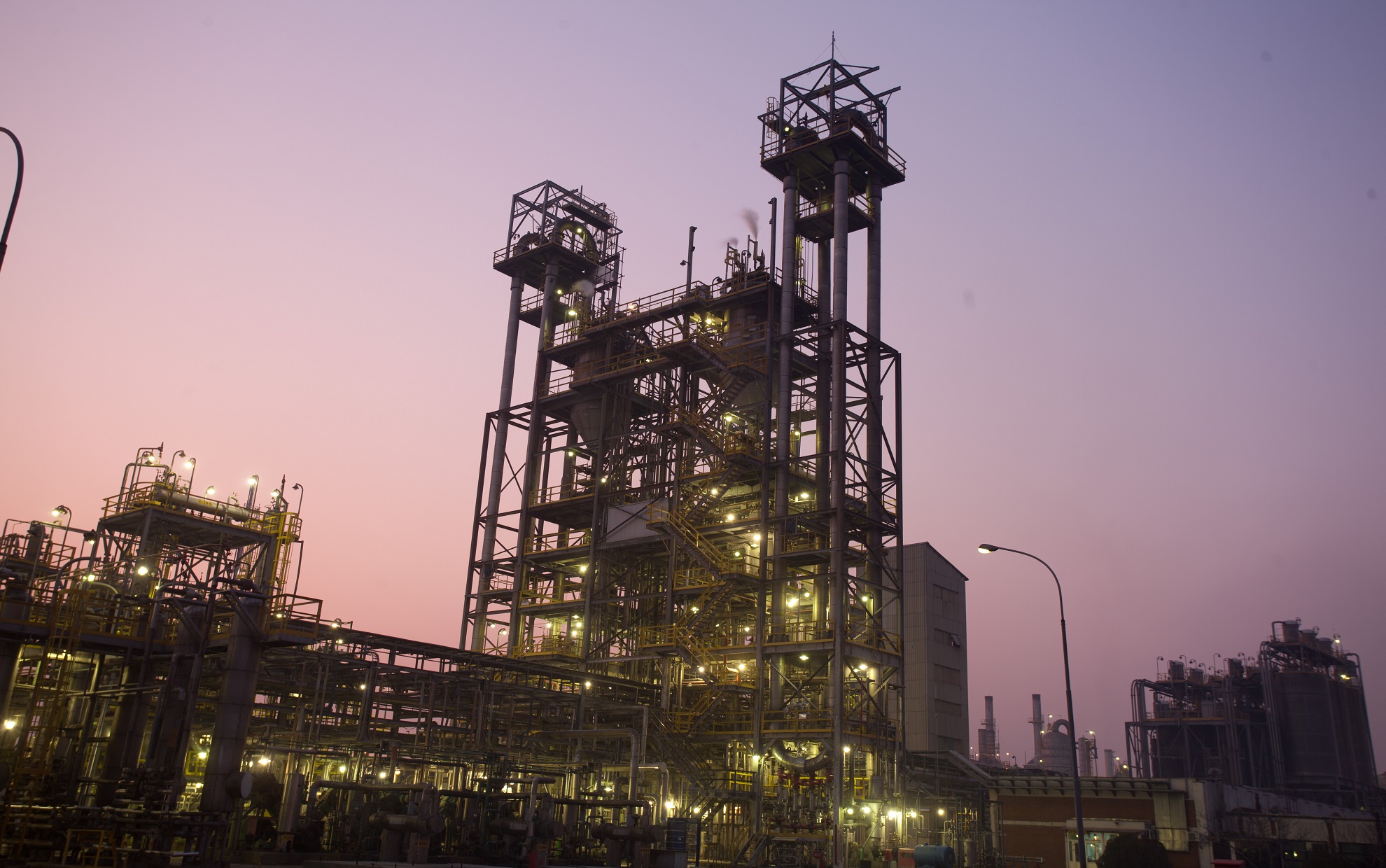
The factory for the production of high-density polyethylene – HDPE, started in 1975. It is based on Phillips Petroleum Co. process technology. (today-Chevron Phillips Chemical Company-USA), and was built according to the project of Crawford & Russell (USA). The trade name of PEVG is HIPLEX®.
This technology for the production of HDPE (”Particle form” – PF) stands out from the others for the quality of the obtained polymer, energy utilization and low emission of harmful substances into the atmosphere. In this way, polyethylene is obtained by polymerization of ethylene in a stream of liquid isobutane with the presence of a chromium-dioxide catalyst on an alumino-silicate base in a continuous tubular reactor at a temperature of up to 110 °C and a pressure of 42 bar.
HDPE
The production process
The production process of high-density polyethylene – HDPE is a continuous operation in which the monomer ethylene polymerizes in the presence of a catalyst. Isobutane is used as a medium in the reactor (LOOP) in order to maintain the polymer and catalyst in the form of a suspension. For the production of copolymers, small amounts of hexene-1 comonomer are added to the reactor. The polymerization reaction is exothermic. Distributed control system (DCS) and programmable logic controllers (PLC) are used to control the operation of the entire system. The formed polymer is separated from the hydrocarbons by depressurizing (flashing) the slurry and heating, whereby the hydrocarbons (isobutane, unreacted ethylene and hexene) evaporate and separate from the polymer powder. After separation, the hydrocarbons are returned to the reactor via the recycle section. The powder is transported for further processing, i.e. to granulation, storage and packaging.
The HDPE factory consists of three technologically connected units – sections: the PF section where the catalyst activation and polymerization reaction are carried out, the finishing section where the obtained polymer powder is extruded into granules and the packaging and storage section.
After the reconstruction of the PF section in 2012, under the license of Chevron Phillips Chemical Company – USA, the capacity of the reactor lines was increased from the projected 50,000 t/year. to 90,000 t/year.